
EMC Question of the Week: November 9, 2026
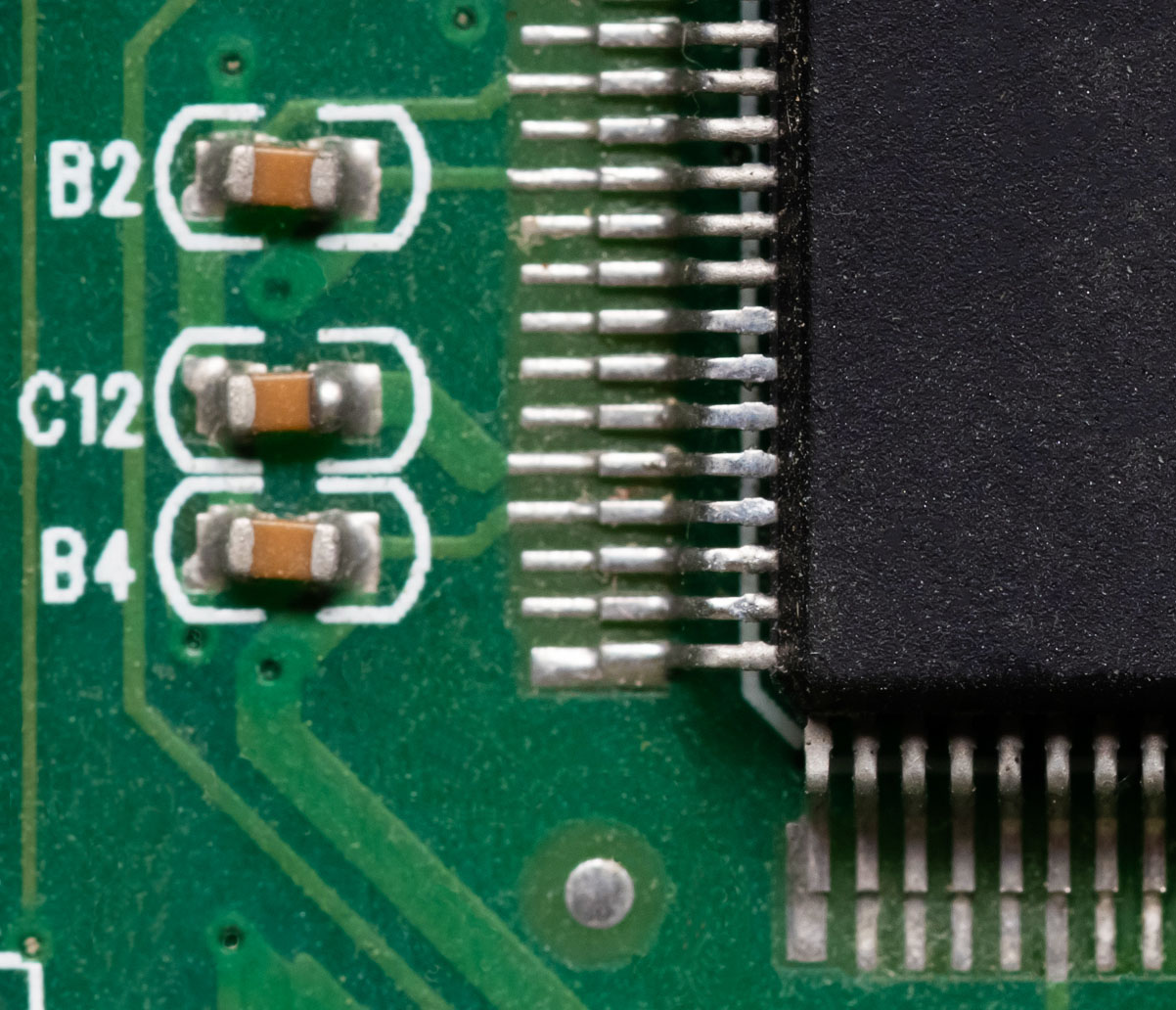
A key difference between a decoupling capacitor and a bypass capacitor is that a bypass capacitor
- blocks DC
- stabilizes the DC voltage
- redirects noise currents
- none of the above
Answer
The best answer is “d.” Despite what you may have read on the internet, there is no widely accepted difference in the definition of a bypass capacitor vs. a decoupling capacitor. The two terms have been used interchangeably for decades. Furthermore, the definitions found on many websites and social media posts generally conflict with each other and make meaningless distinctions.
Regardless of whether they are called decoupling or bypass capacitors, these capacitors are connected across DC power rails. They stabilize the power bus voltage. Irreputable web sources may claim a distinction based on the location of the capacitor or the source of the noise. In reality, these terms are not defined that way, and making those types of distinctions does not provide any useful design insight.
One distinction that is actually important is whether a decoupling capacitor is "local" or "global". A local decoupling capacitor is positioned and connected in a manner that provides decoupling for one active device (or one pin of an active device). Global decoupling capacitors (e.g. bulk decoupling capacitors) stabilize the voltage of the entire power bus.
Another important distinction is the range of frequencies over which a capacitor is designed to operate. Low-frequency capacitors typically provide most of the needed charge at kHz to MHz frequencies. High-frequency capacitors are designed to provide as much charge as possible at frequencies ranging from 10s of MHz to GHz. For low-frequency decoupling capacitors the amount of capacitance tends to be the main design parameter. For high-frequency capacitors, the connection inductance is generally the most important parameter to optimize.
Have a comment or question regarding this solution? We'd like to hear from you. Email us at