
Laboratory Exercises to Accompany Chapters 1-3
These demonstrations and laboratory exercises illustrate concepts described in Electromagnetic Compatibility Course Notes.
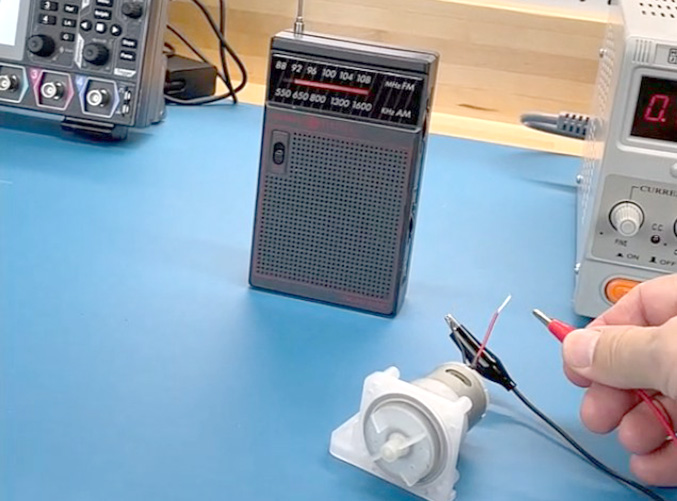
Chapter 1: Examples of Electromagnetic Interference
It’s generally a good idea to bring something into the classroom that demonstrates various forms of electromagnetic interference. This could take many forms, but here are some common examples using readily available components.
Laboratory Exercise 01: Examples of Electromagnetic Interference
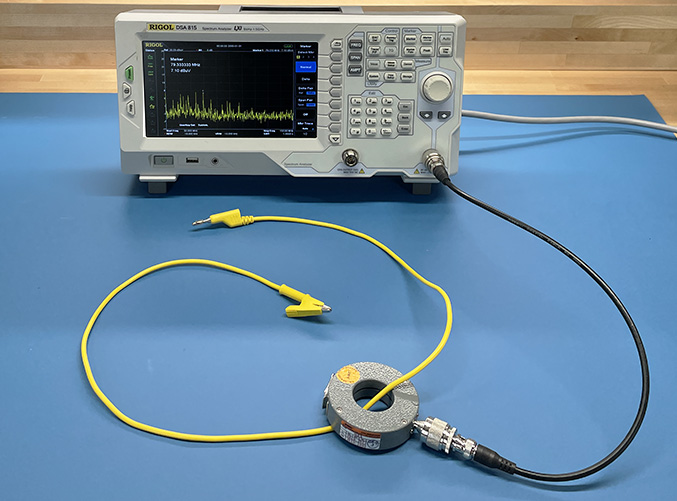
Chapter 1: Ambient Signal and Noise Measurements
A spectrum analyzer can be used to demonstrate that electromagnetic noise is everywhere.
Laboratory Exercise 02: Ambient Signal and Noise Measurements
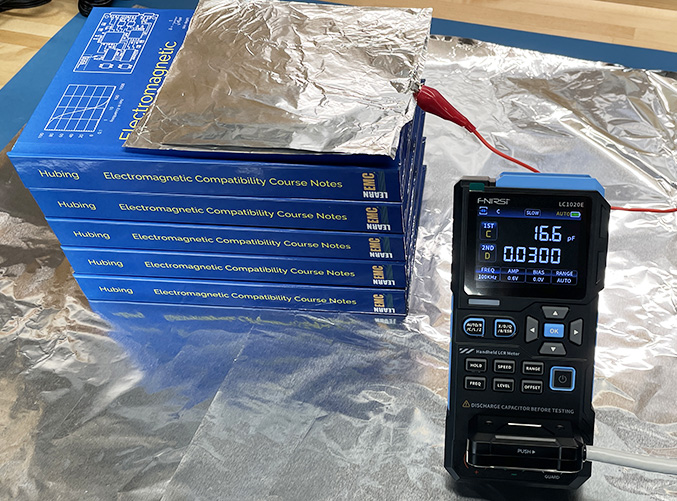
Chapter 2: Measuring the Absolute Capacitance of an Object
Absolute capacitance and self-capacitance play an important role in EMC design and analysis. This demonstration (which could be assigned as a lab exercise) helps students see that absolute capacitance is something very real and measurable.
Laboratory Exercise 03: Absolute Capacitance Measurements
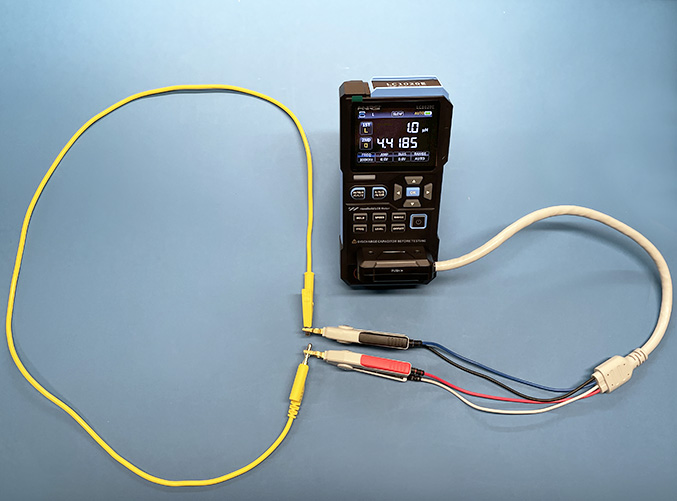
Chapter 2: Measuring the Inductance of a Wire Loop
This demonstration (which could be assigned as a lab exercise) helps students get a feel for how changes in the size, shape, and wire thickness affect loop inductance.
Laboratory Exercise 04: Loop Inductance Measurements
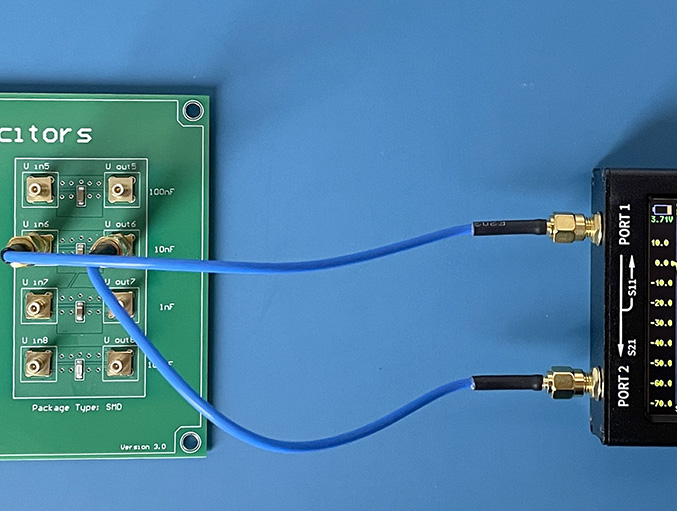
Chapter 2: Measuring Component Impedance with a Vector Network Analyzer
This demonstration helps students to get a feeling for the effect that parasitics have on the electrical behavior of components. It also demonstrates how to measure these parasitics with a VNA.
Laboratory Exercise 05: Component Impedance Measurements
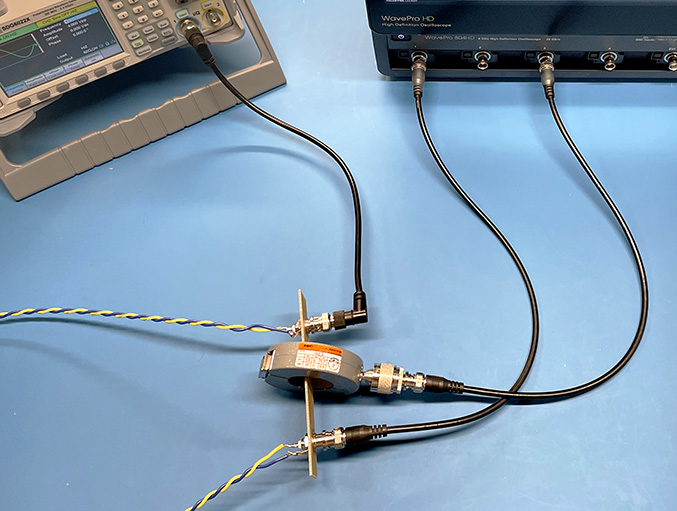
Chapter 2: The Path of Least Impedance
One of the more fundamental skills in EMC and signal integrity is anticipating where signal and noise currents flow. The exercise makes two important points: Currents return to their source, and currents take the path(s) of least impedance.
Laboratory Exercise 06: Path of Least Impedance
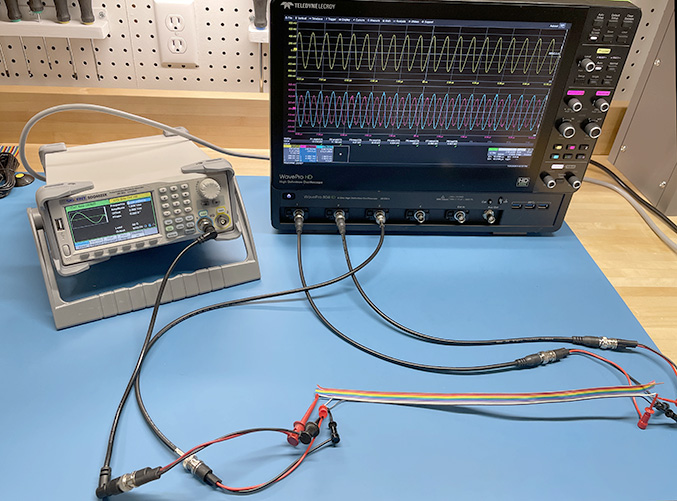
Chapter 3: Common-Impedance Coupling in a Ribbon Cable
Students measure the common-impedance coupling in a ribbon cable and compare the results to simple calculations.
Laboratory Exercise 07: Common-Impedance Coupling in a Ribbon Cable
Chapter 3: Electric-Field Coupling in a Ribbon Cable
Students measure the electric-field coupling in a ribbon cable and compare the results to simple calculations.
Laboratory Exercise 08: Electric Field Coupling in a Ribbon Cable
Chapter 3: Magnetic-Field Coupling in a Ribbon Cable
Students measure the magnetic-field coupling in a ribbon cable and compare the results to simple calculations.
Laboratory Exercise 09: Magnetic Field Coupling in a Ribbon Cable